
Debts Coming Due
What is the U.S. Debt Refinancing Wall?
The U.S. government’s growing debt challenge is commonly discussed in terms of its size, but an equally important question is what happens when that debt comes due. Treasury debt does not remain outstanding indefinitely. As bonds mature, the government must refinance them by issuing new securities at the prevailing interest rate.¹
This process of refinancing maturing debt by issuing new securities creates what is known as a “refinancing wall”. Rather than all debt coming due at a single maturity date, this wall is a rolling series of maturities that makes the government increasingly sensitive to rising interest rates.
The Treasury will need to refinance approximately $9.7 trillion of maturing securities in 2026, in addition to borrowing to finance the federal deficit, which occurs when government spending exceeds revenues. In the fiscal year 2025, the Treasury refinanced $9.1 trillion while also raising $1.9 trillion in new borrowing.²
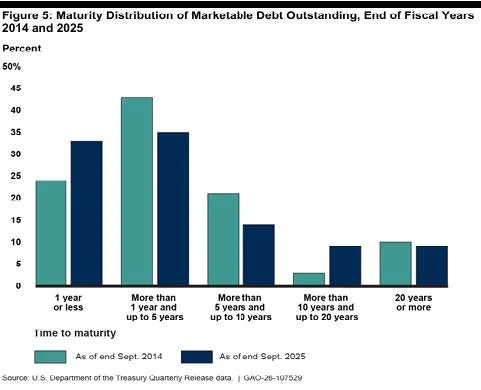
Chart 1 | Maturity Distribution of Marketable Debt Outstanding, End of Fiscal Years 2014 and 2025
The composition of the debt changes constantly, but the Treasury has increasingly relied on shorter-term borrowing in recent years. As of September 2025, approximately one-third of the Treasury’s debt was scheduled to be refinanced within 12 months. This means a large portion of the debt will need to be replaced in the coming years amid likely higher interest rates, which raises the government’s borrowing costs.²
What Does This Mean for Interest?
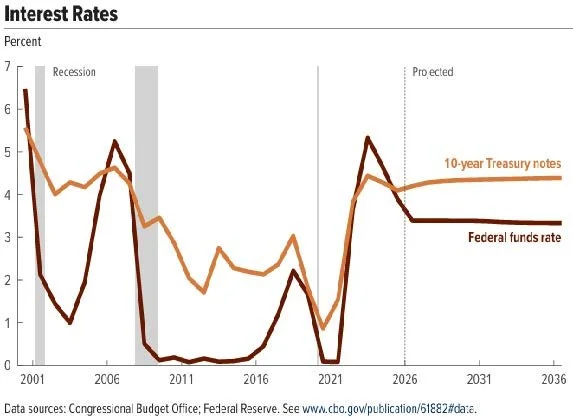
Chart 2 | Interest Rates
Much of the current U.S. debt was issued during the low-rate period of the 2010s and early 2020s. An estimated 60% of U.S. debt originated when the average interest rate on 10-year Treasury notes was less than 3%.³ Today, the 10-year U.S. Treasury rate is roughly 5%.⁴ This means that as low-rate securities mature and are replaced with higher-rate debt, federal borrowing costs continue to increase over time. In 2026, the average interest rate on debt held by the public is estimated to be 3.4% and is expected to rise. Simultaneously, the net interest payments owed by the government are projected to double from $1 trillion in 2026 to $2.1 trillion in 2036.5 This could potentially create a debt-interest feedback loop in which higher interest expenses increase the debt stock, larger deficits require additional borrowing, and additional borrowing increases the amount of debt to be refinanced.
Fixed Income Effects
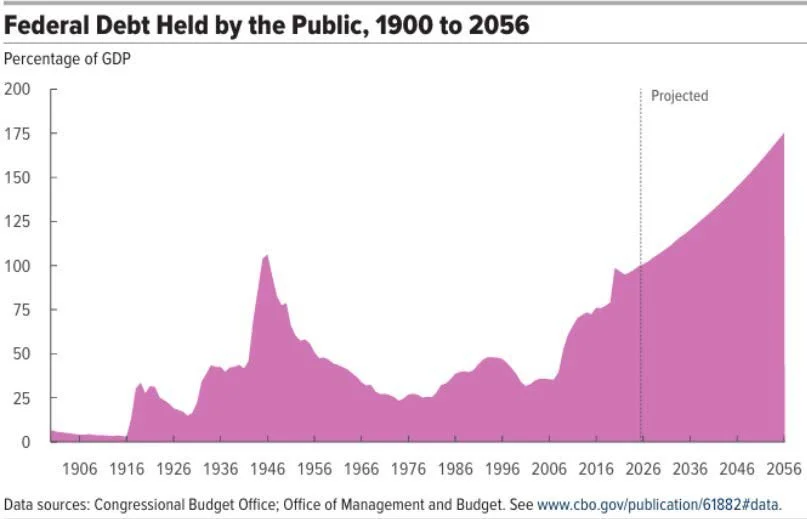
Chart 3 | Federal Debt Held by the Public, 1900 to 2056
Treasury yields act as a benchmark for interest rates across the fixed-income market, so sustained increases in government borrowing costs can impact rates on corporate bonds, mortgages, and other credit markets. Higher yields can initially lower the prices of existing fixed income securities since older bonds that carry lower yields are often less attractive than newer issues with higher yields. Ultimately, however, rising interest rates can provide investors with higher income and more attractive reinvestment opportunities.
Social Security
Adding another layer to the U.S. debt picture is the Old Age and Survivors Insurance Trust Fund (OASI), the fund for Social Security benefits, which is projected to be depleted in the fourth quarter of 2032. At that point, program income would be insufficient to cover scheduled Social Security benefits – falling short by 32%.⁶
Social Security trust funds hold special-issue Treasury securities. As trust-fund reserves are drawn down, the securities are redeemed, which requires the Treasury to provide cash to the Social Security program. If the government does not have sufficient revenues to fund those redemptions, the broader budget must absorb the difference through higher taxes or additional borrowing, potentially increasing the government’s overall financing needs.
Conclusion
The U.S. debt maturity wall underscores the fact that the nation's fiscal challenges extend beyond the simple total amount of debt outstanding and include recurring refinancing costs on trillions of dollars of maturing securities in a rising rate environment. As low-interest debt is replaced with higher-cost borrowing, federal interest expenses are expected to rise, increasing pressure on the budget. Combined with persistent deficits, growing debt levels, and ballooning obligations, like Social Security, the government's ability to refinance debt at sustainable rates will play a critical role in maintaining long-term fiscal stability and economic confidence.
The statements provided herein are based solely on the opinions of the Osaic Research Team and are being provided for general information purposes only. Neither the information nor any opinion expressed constitutes an offer or a solicitation to buy or sell any securities or other financial instruments. Any opinions provided herein should not be relied upon for investment decisions and may differ from those of other departments or divisions of Osaic Wealth, inc. (“Osaic”) or its affiliates.
Certain information may be based on information received from sources the Osaic Research Team considers reliable; however, the accuracy and completeness of such information cannot be guaranteed. Certain statements contained herein may constitute “projections,” “forecasts” and other “forward-looking statements” which do not reflect actual results and are based primarily upon applying retroactively a hypothetical set of assumptions to certain historical financial information. Any opinions, projections, forecasts and forward-looking statements presented herein reflect the judgment of the Osaic Research Team only as of the date of this document and are subject to change without notice. Osaic has no obligation to provide updates or changes to these opinions, projections, forecasts and forward-looking statements. Osaic is not soliciting or recommending any action based on any information in this document.
Index performance does not reflect the deduction of any fees and expenses, and if deducted, performance would be reduced. Indexes are unmanaged and investors are not able to invest directly into any index. Past performance cannot guarantee future results.
Securities and investment advisory services are offered through the firms: Osaic Wealth, Inc. and Osaic Institutions, Inc., broker-dealers, registered investment advisers, and members of FINRA and SIPC. Securities are offered through Osaic Services, Inc. and Ladenburg Thalmann & Co., broker-dealers and members of FINRA and SIPC. Advisory services are offered through Ladenburg Thalmann Asset Management, Inc., Osaic Advisory Services, LLC. and CW Advisors, LLC., registered investment advisers. Advisory programs offered by Osaic Wealth, Inc. are sponsored by VISION2020 Wealth Management Corp., an affiliated registered investment adviser.
1 Understanding the National Debt | U.S. Treasury Fiscal Data
3 The High Cost of Borrowing at Low Rates-2023-09-25
5 The Budget and Economic Outlook: 2026 to 2036 | Congressional Budget Office
9145272